
Lux Nook guide layout. Open Options → Code editor to edit the complete guide. Use Preview to review the finished page.
Media Wall Materials Guide
Choose media wall materials that belong to the room—and still feel considered when the television is off.
Design one complete media wall—not a collection of finishes.
Begin with the room’s flooring, wall color, furniture, natural light and architectural style. Then choose one dominant media-wall material, one supporting wood or painted finish, and a restrained metal or hardware accent.
The television, fireplace when included, cabinetry, open shelving and lighting should read as one composition. A beautiful sample can still be wrong when it competes with everything around it.
Field note. Review physical samples vertically on the actual wall in daylight and again after dark with the room lighting on.
Let the material establish the character.
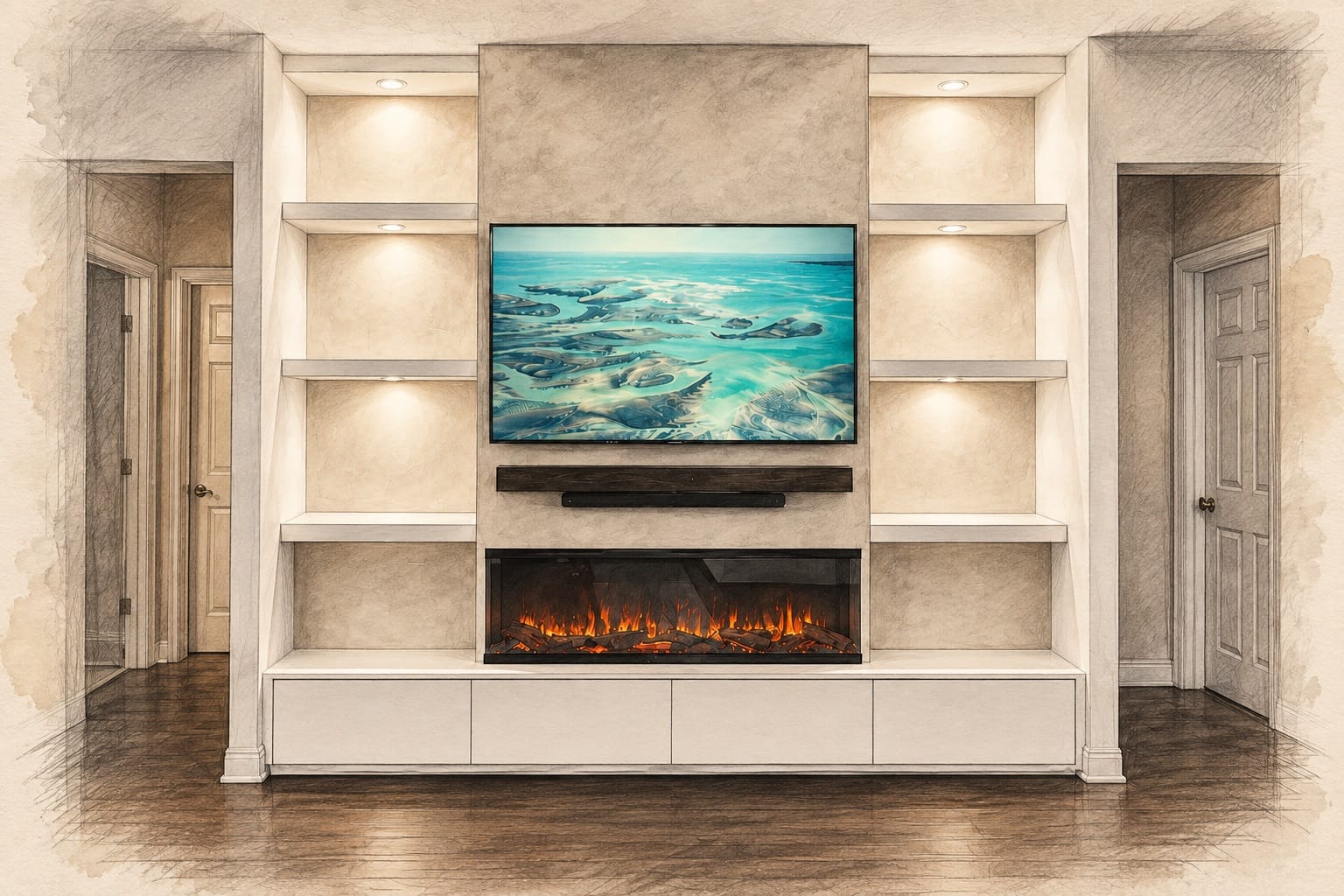
These illustrations are drawn from three different Lux Nook TV media wall projects. Each combines the screen, storage, architectural finish and lighting as one designed feature.
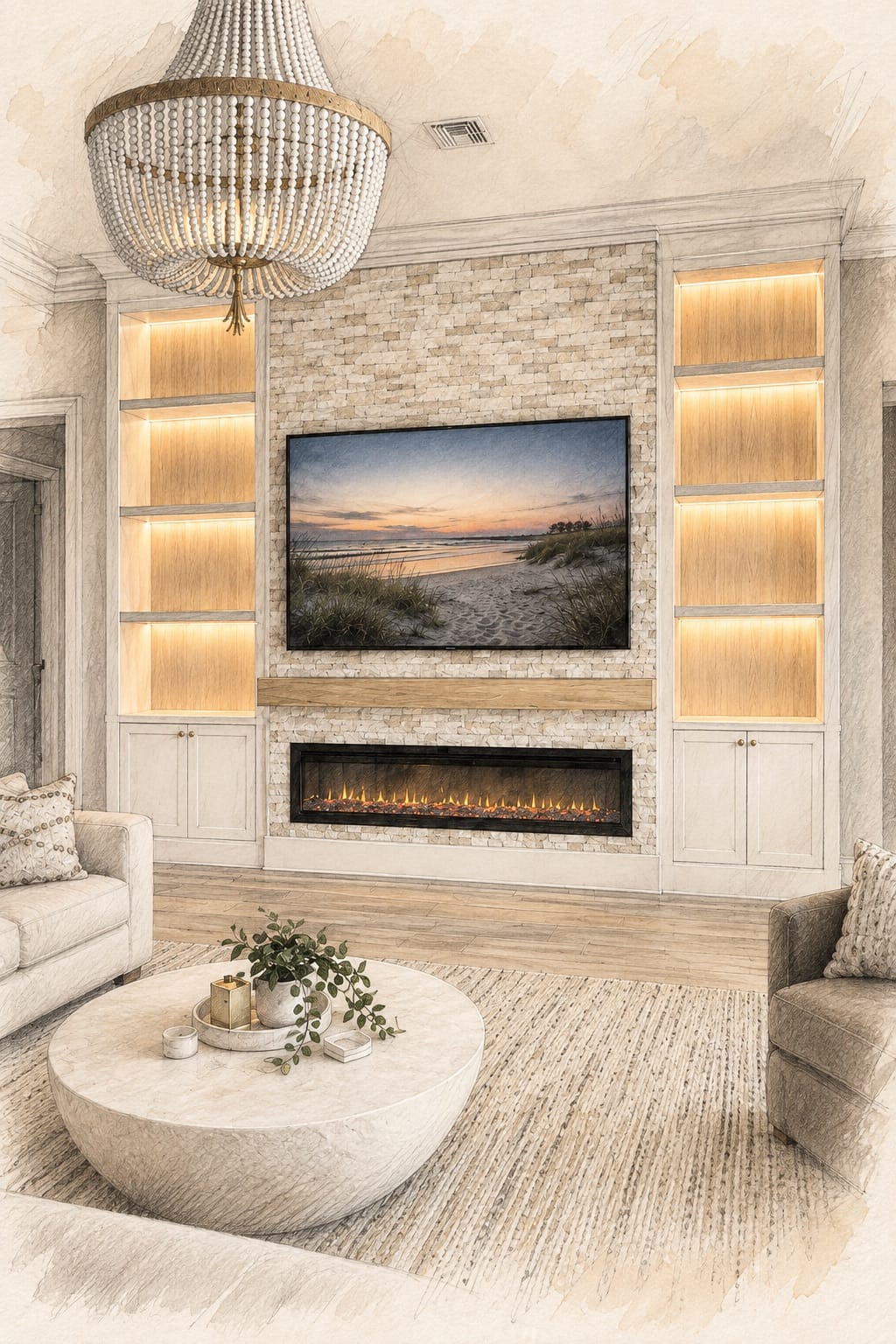
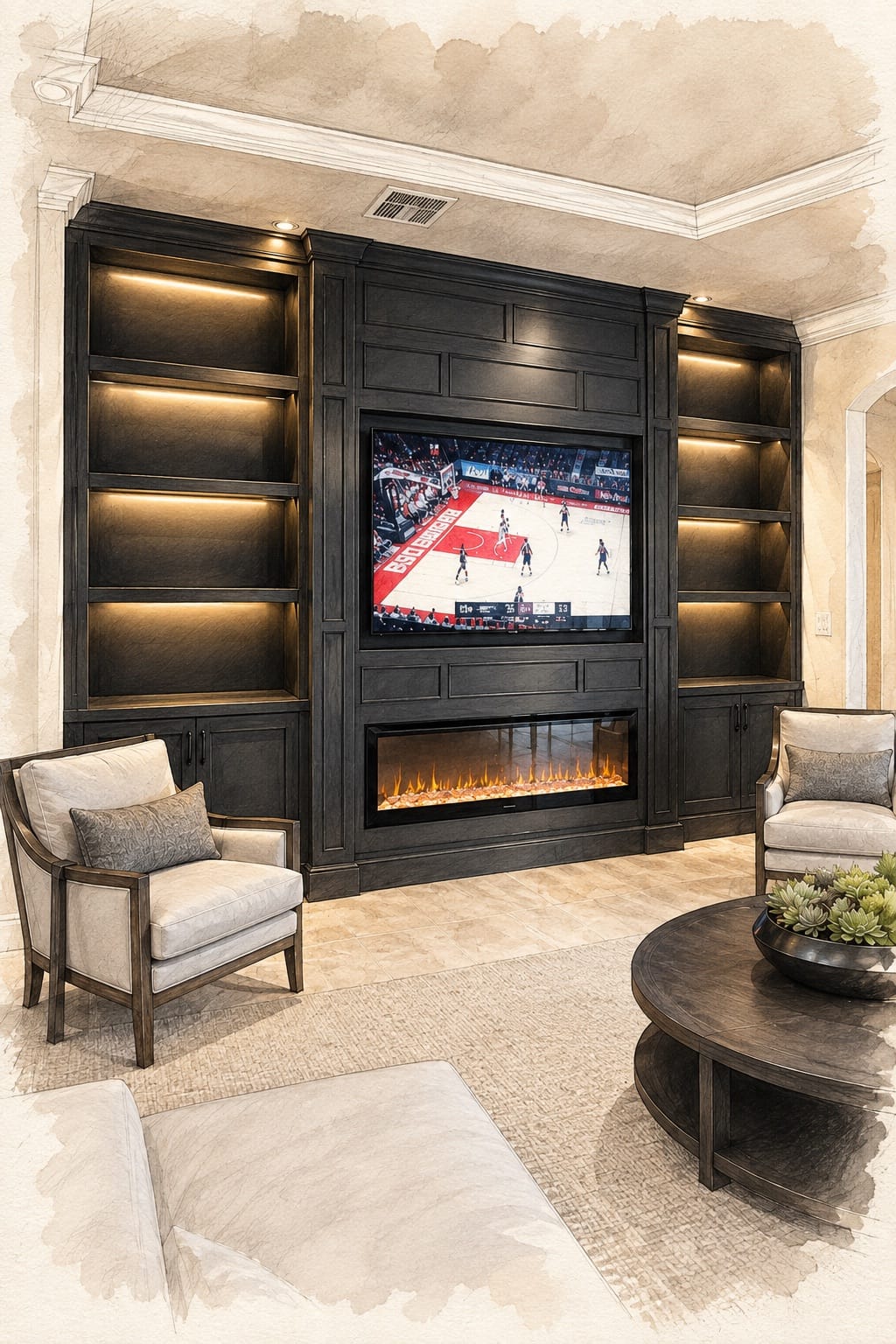
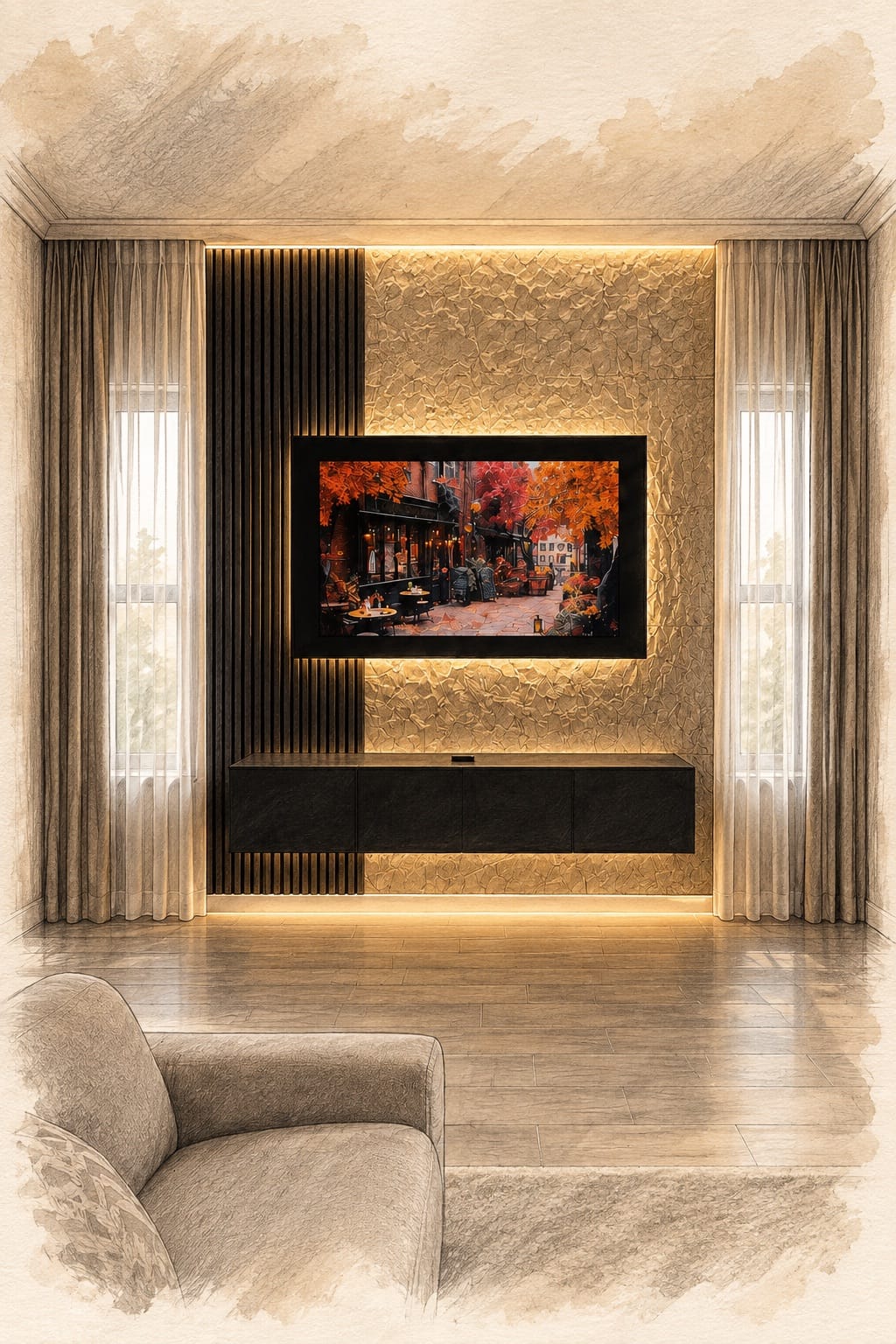
Six palettes—and the decision each one requires.
Every image below is based on a different completed Lux Nook TV media wall. The lesson is not to copy one finish; it is to see how finish, storage, light and proportion work together.
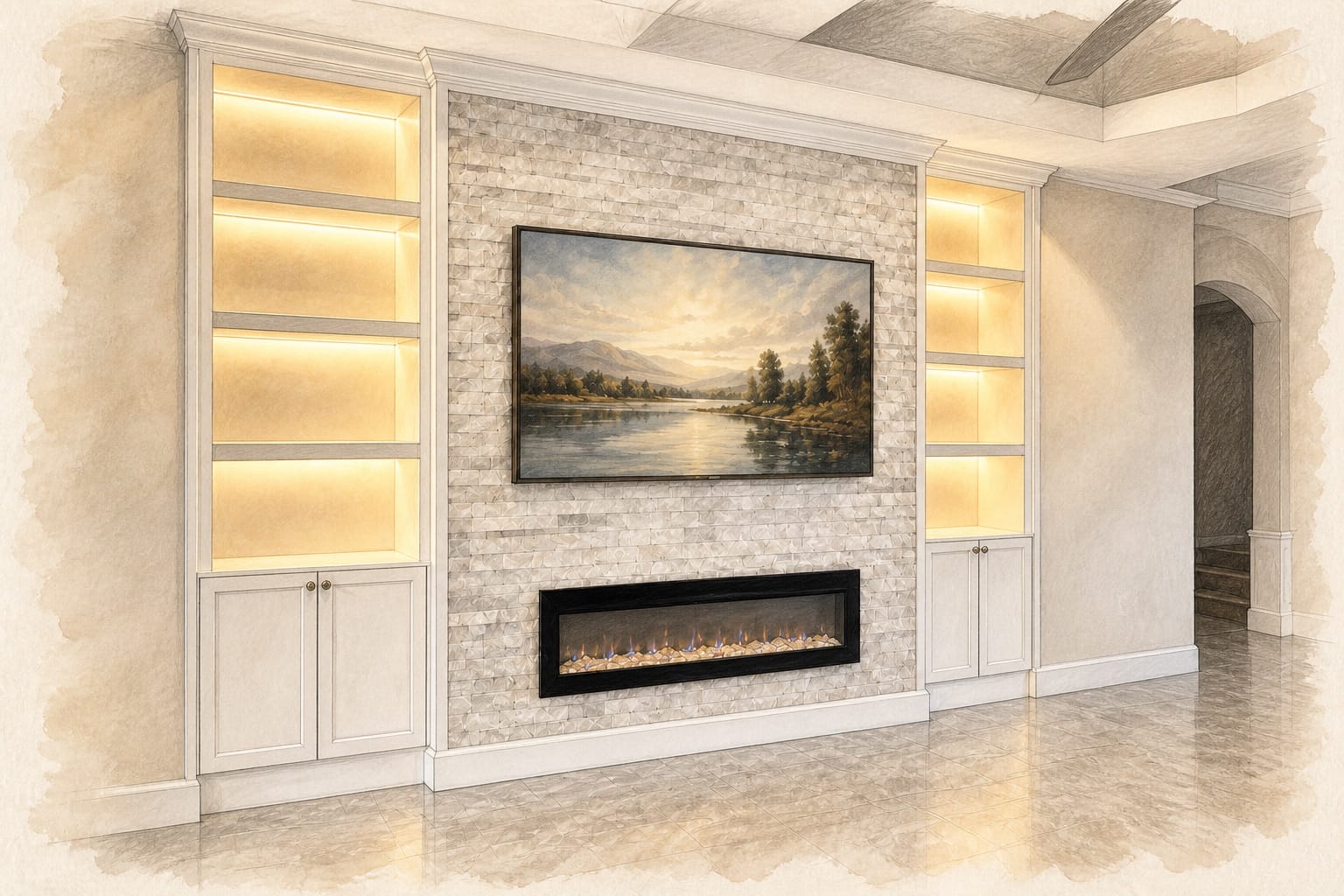
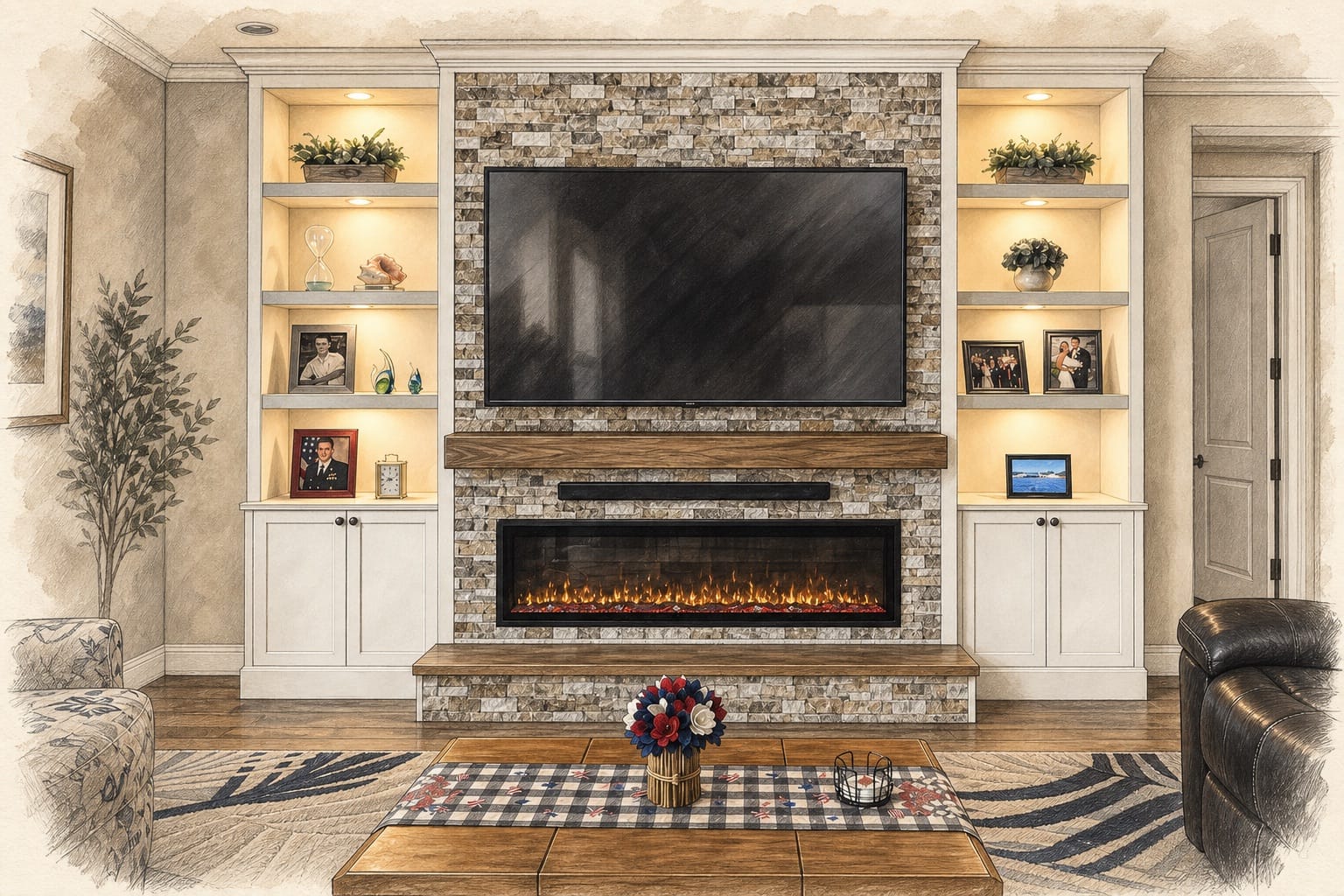
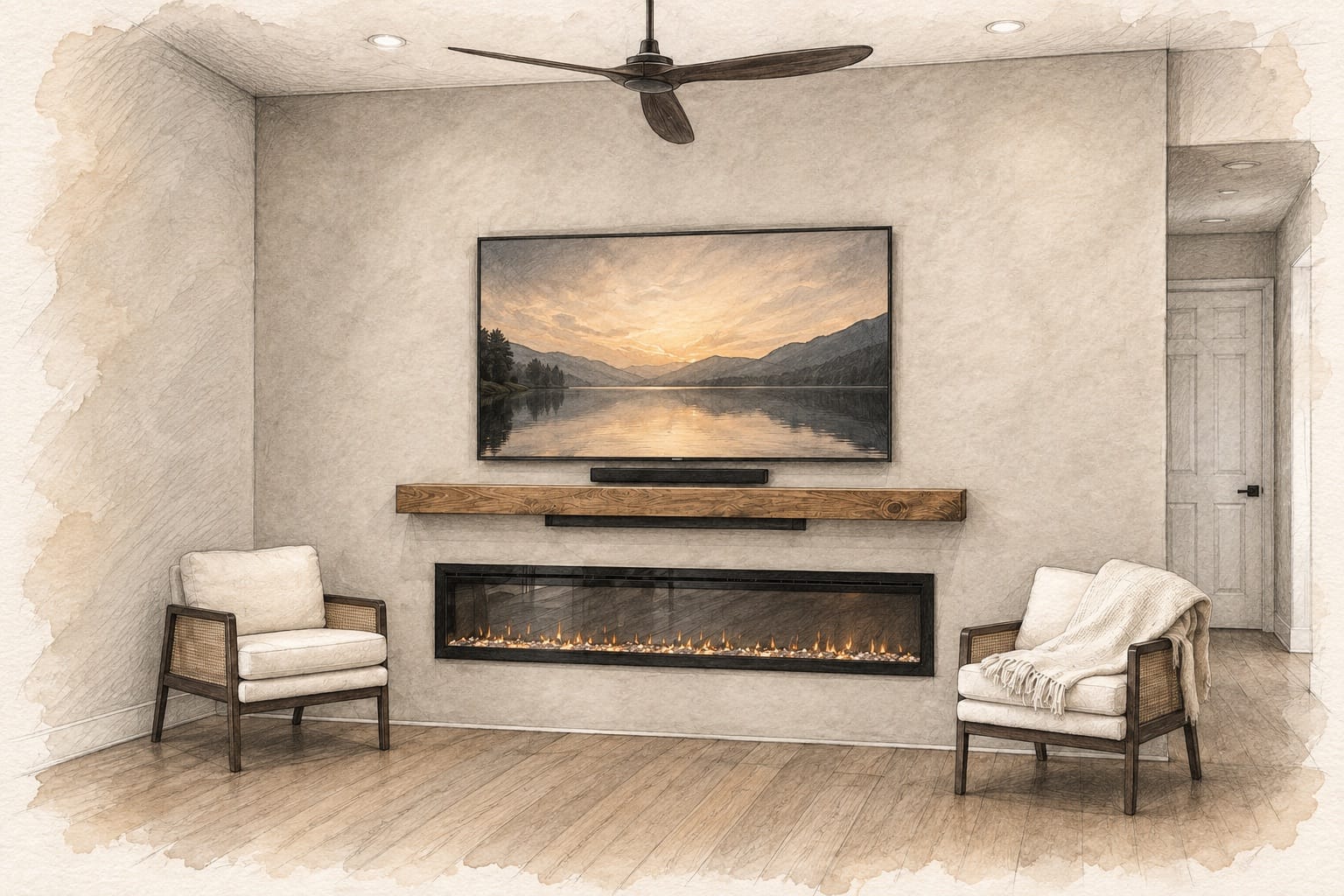
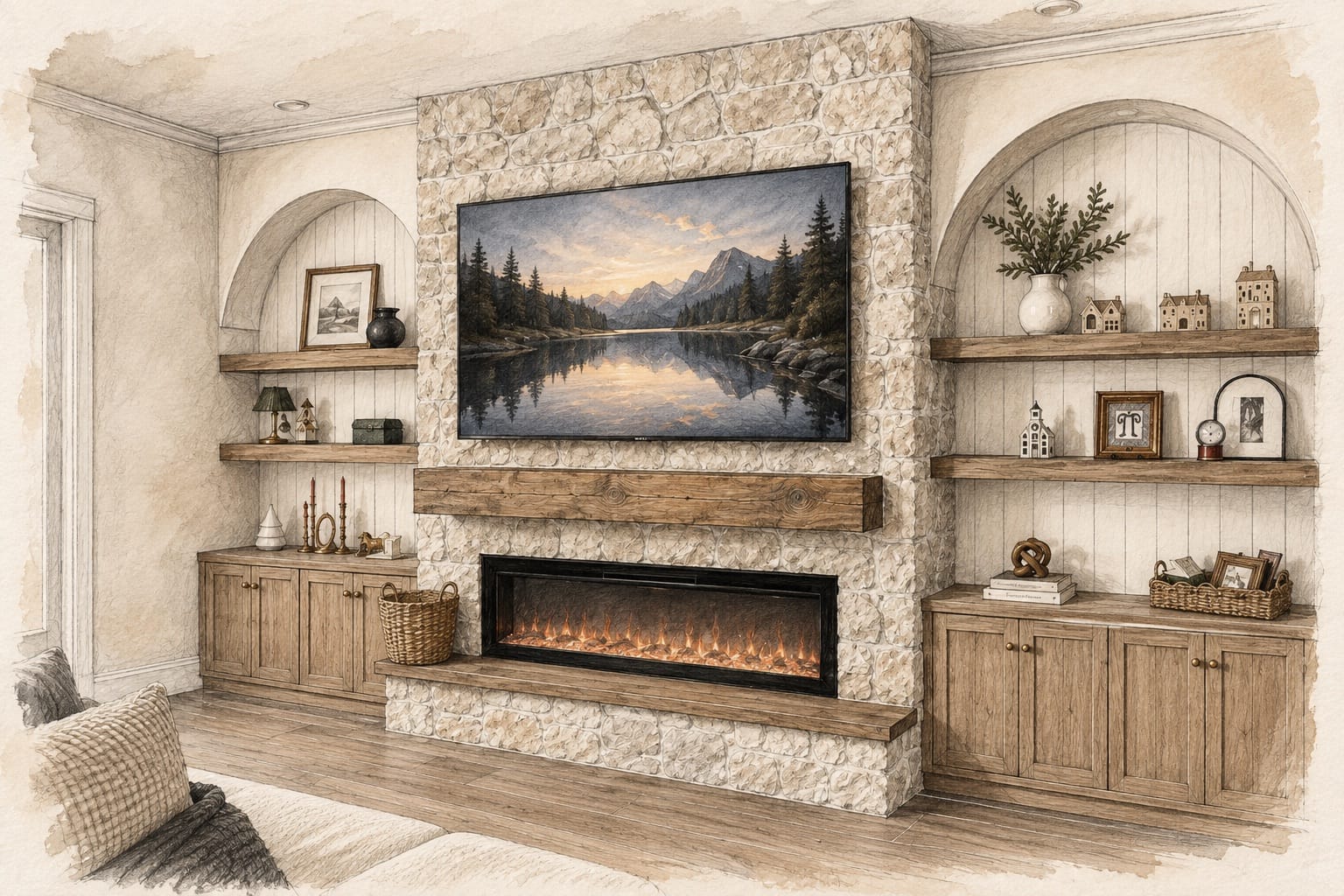
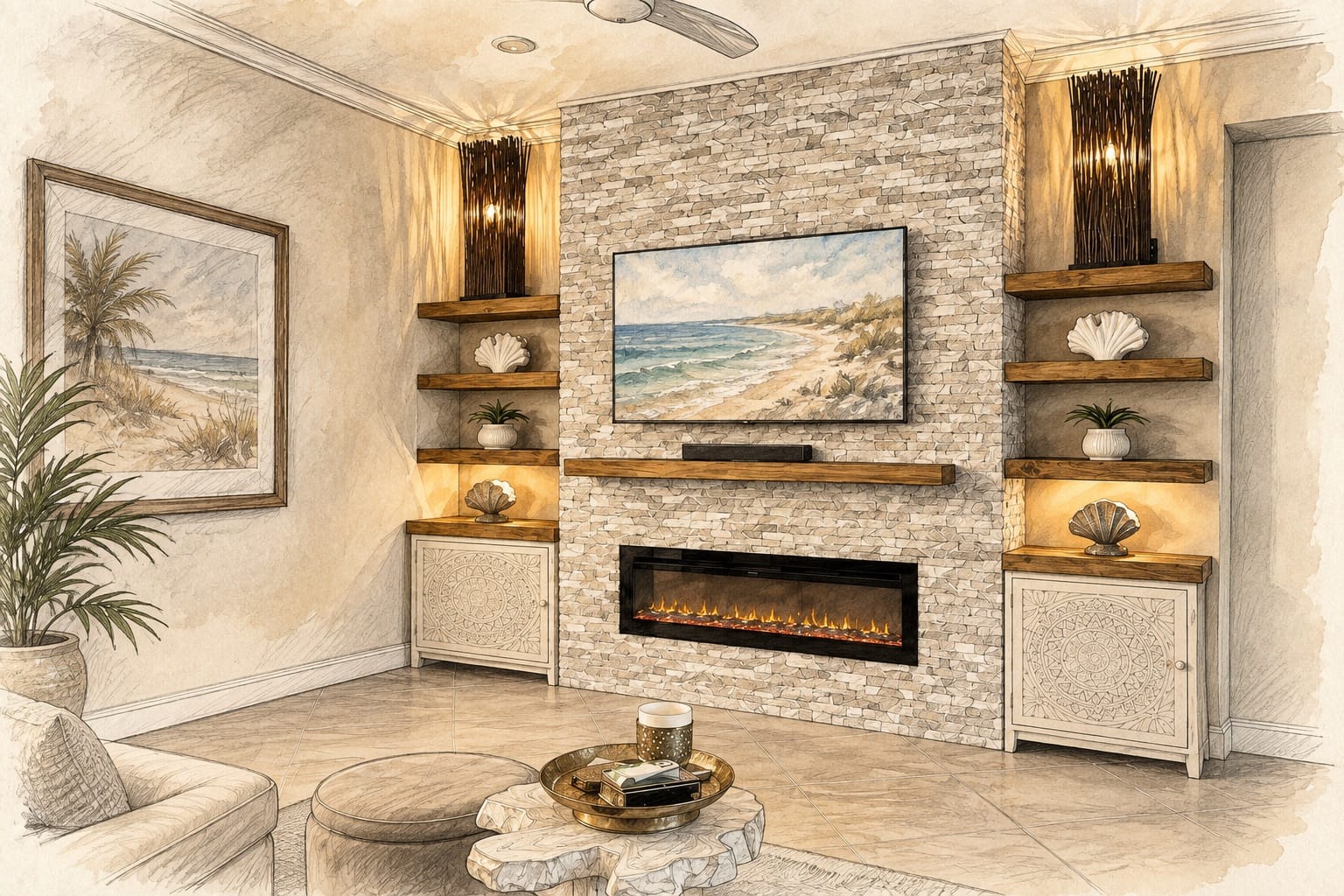
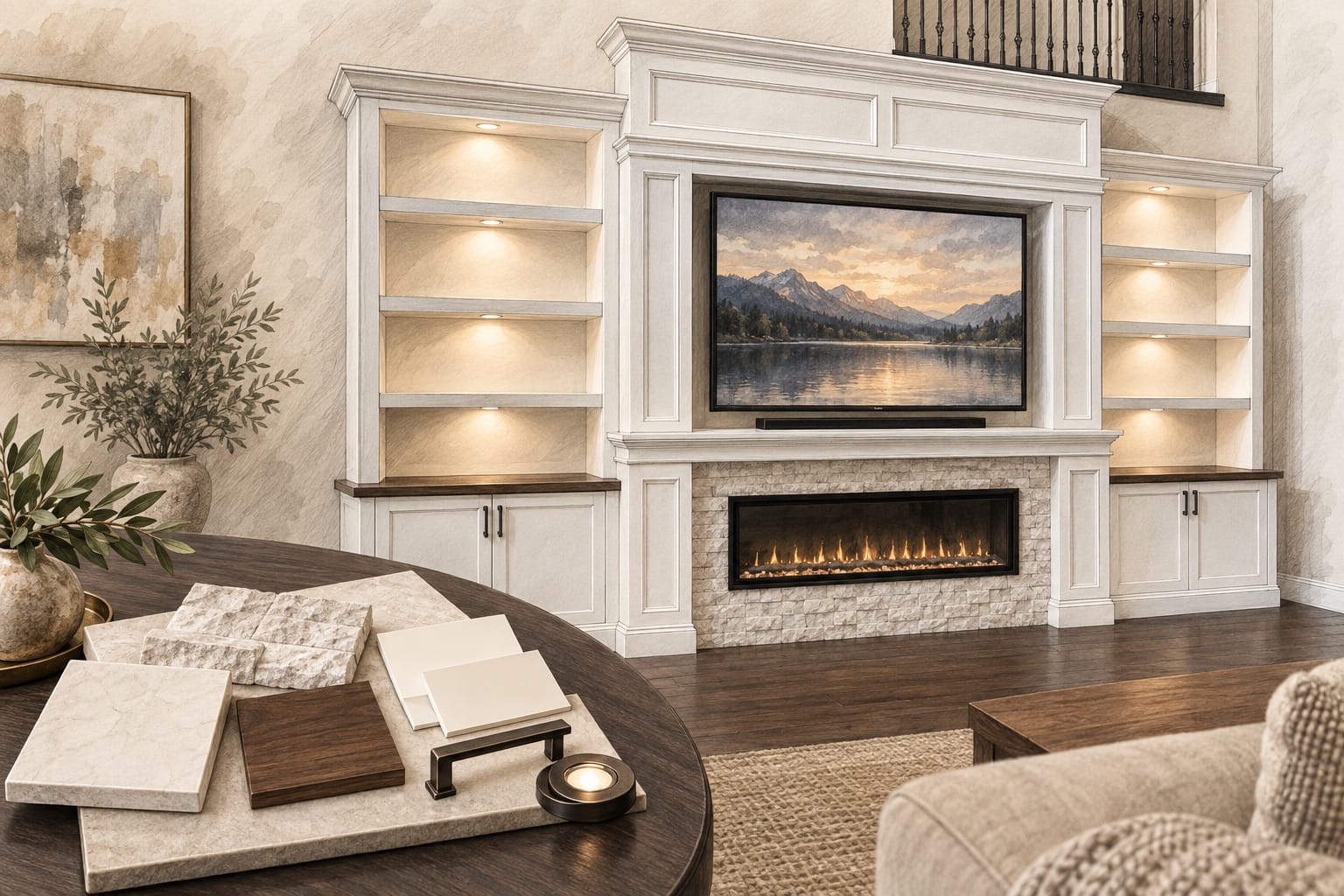
Bring every sample into the same conversation.
View the media-wall finishes beside the room’s flooring, nearby paint, upholstery and fixed metal finishes. The wall should feel deliberately connected to the home, even when it becomes the visual focal point.
Approve a range, not a thumbnail
Stone, wood, limewash and other hand-finished materials carry natural variation. Request representative samples, define the acceptable range, and review important transitions, edges and joint language before the final decision.
Keep the hierarchy clear. One dominant material, one supporting finish and one small accent usually feel calmer than several equally assertive surfaces.
Test the wall twice: daylight and evening.
Grazing light makes stone relief, shiplap lines and trowel movement more pronounced. Shelf lighting warms wood and paint; daylight may reveal undertones that disappear at night.
Place samples in their intended orientation and location. Review them with the actual lamp color temperature, dimming level and nearby finishes. Avoid reflections across the television and harsh hotspots on glossy surfaces.
Questions to answer
- Does the finish still look right with the TV off?
- Does the light exaggerate texture in a good way?
- Do cabinetry whites agree with the room paint?
- Does the wood become too orange under warm LEDs?
- Are drivers and replaceable components accessible?
Record what was actually approved.
- Room photographs and existing palette
- Dominant wall material and manufacturer
- Product, collection and exact color
- Representative stone or tile range
- Paint manufacturer, color and sheen
- Wood species, cut and stain sample
- Cabinet door style and finish
- Shelf, mantel and countertop finish
- Joint, edge and transition language
- Hardware and visible metal finish
- Lighting location and color temperature
- Daylight and evening sample review
- Fireplace finish compatibility, if included
- Final physical samples retained
Material questions to resolve early
Should every media wall include stone?
No. Painted millwork, limewash, acoustic panels, wood slats and quiet smooth finishes can be equally architectural. The right choice depends on the room and the complete media-wall composition.
Can I choose colors from a phone screen?
Use digital images for direction only. Screen settings, photography and room light change color; approve physical samples in the actual space.
Should built-ins match the room’s trim?
They may match, coordinate or intentionally contrast. The decision should consider adjacent paint, crown molding, doors, flooring and the visual weight of the full wall.
How many materials should a media wall use?
There is no fixed number, but a clear hierarchy is essential. One dominant finish supported by cabinetry or wood and a restrained accent usually reads more cohesively than several competing focal materials.
Your media wall should belong to the room.
Share room photos, approximate dimensions, TV size, storage needs, inspiration and preferred finishes. Lux Nook Design will develop a complete composition around your space—not a stand-alone fireplace treatment.
Primary references
- Benjamin Moore Aura®: premium interior paint
- Sherwin-Williams Emerald® Designer Edition™: premium interior paint
- Lux Nook Design: TV media wall portfolio
Guide 01: How to Plan a TV & Fireplace Wall · Guide 02: Choosing the Right Fireplace Size